
Every internet plan looks the same on a billboard: a big number and the word fast. What decides how a connection actually feels is the wire behind the number, and fiber is a genuinely different wire. It sends data as pulses of light through strands of glass thinner than a hair. No copper, no coax, no dinnertime slowdowns. Just light, doing what light does.
Glass and light instead of copper and electricity
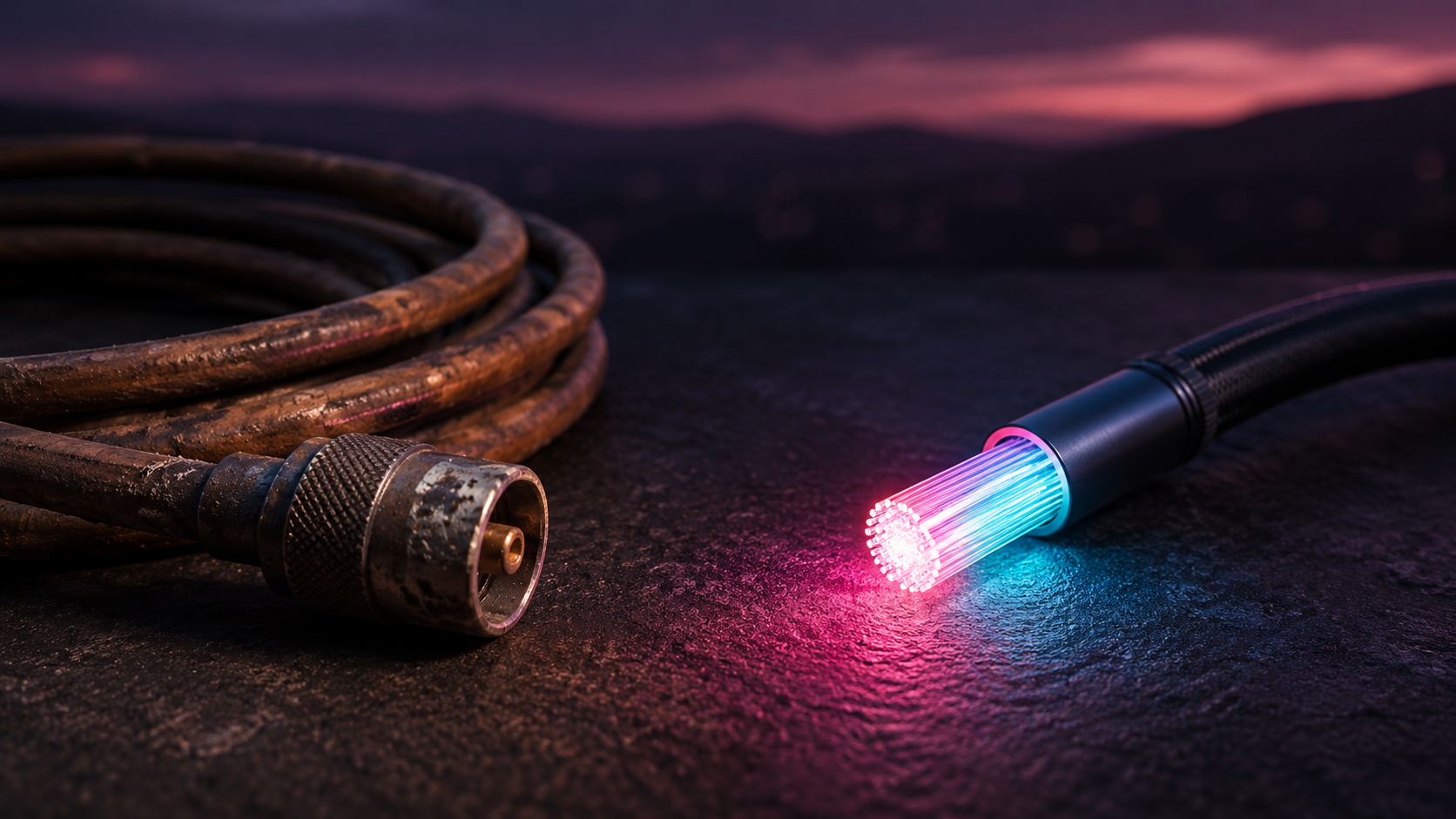
Cable and DSL push electrical signals through decades-old copper. That copper was buried for other jobs, television in one case and telephone calls in the other, and it has been carrying internet traffic as a second career ever since. Electrical signals fade over distance and pick up noise from everything around them, so a copper network spends a real share of its capacity correcting for the medium it runs on.
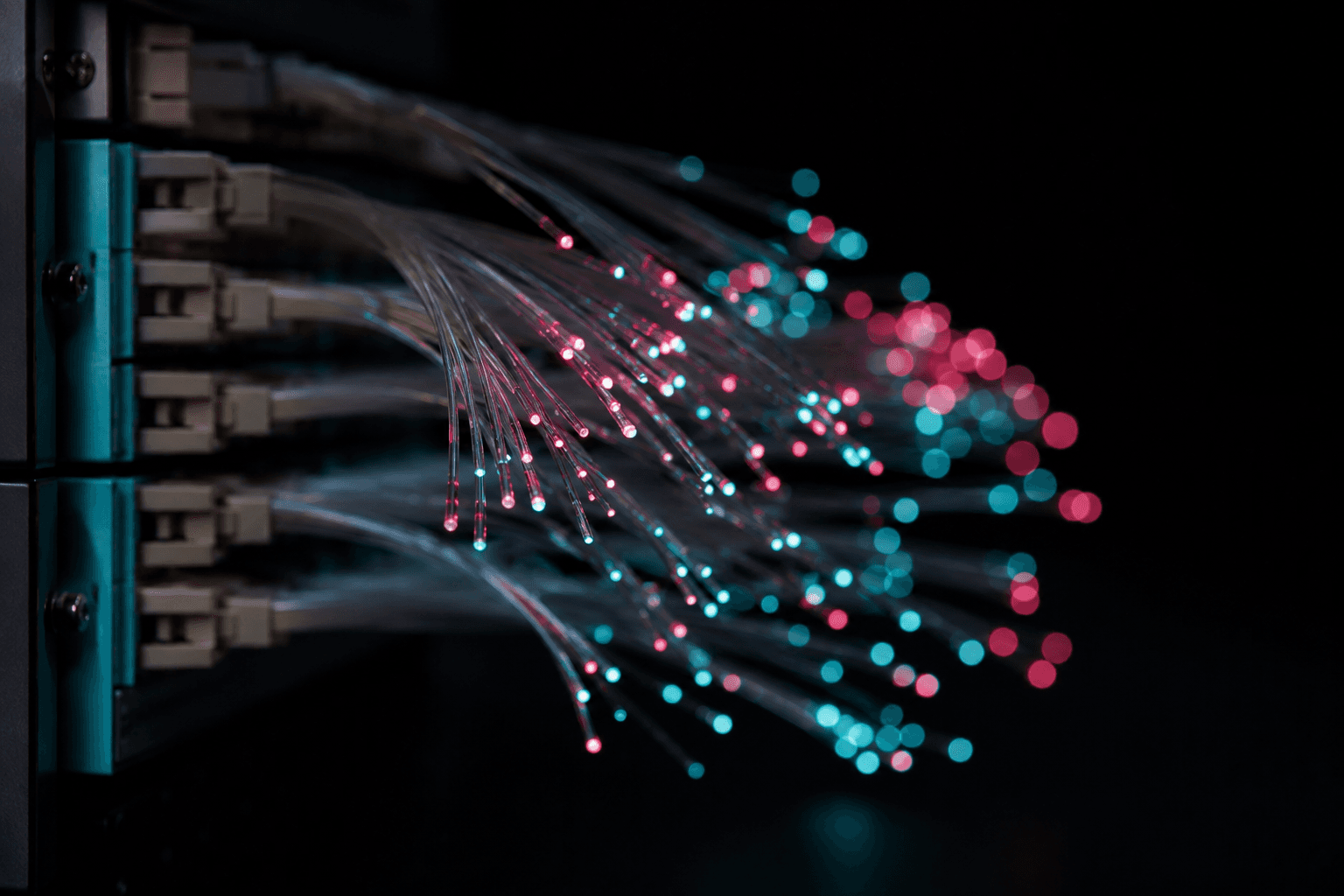
Fiber uses laser light through glass. A transmitter flickers a laser on and off billions of times a second, the strand guides that light down the street and around corners, and a receiver at your house reads it back out as data. Light does not corrode, does not care about the electrical field from the transformer on the pole, and loses very little over the distances a town spans. More data, longer distances, fewer compromises in between.
Distance is the other thing copper minds and glass mostly does not. On DSL, how far you sit from the equipment sets your ceiling, so two neighbors on the same plan can get very different service. Light holds its shape across the distances a town spans. The house at the end of the run gets the same connection as the one across from the cabinet.
Fiber to the home, not fiber to the neighborhood
This part is worth knowing, because the word fiber shows up in a lot of advertising. Nearly every network has fiber somewhere in the middle of it. The question is where the fiber stops. Some providers run glass to a cabinet at the end of the street and hand the last few hundred feet back to copper, which puts every copper limitation right back in the path at the point where you live.
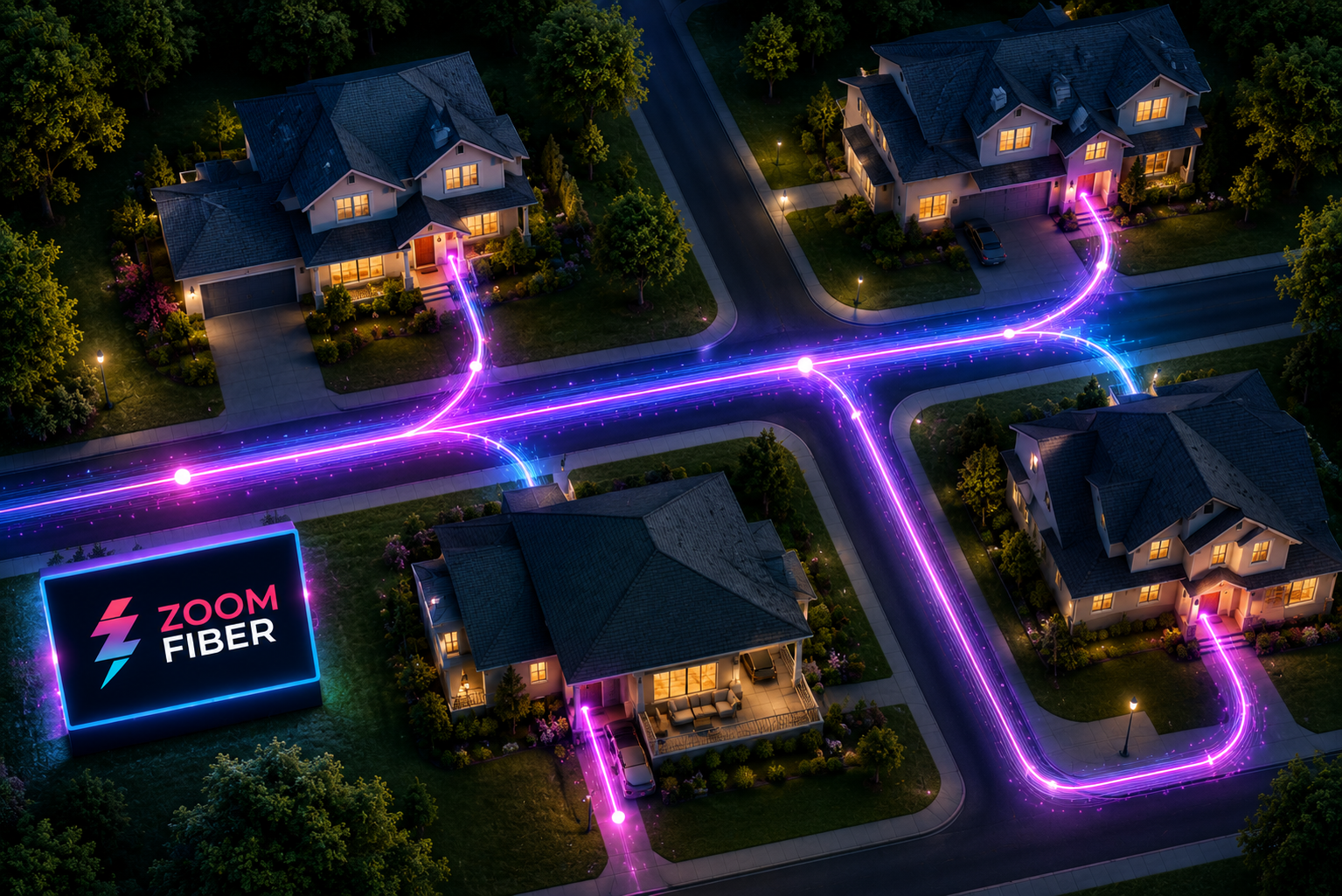
Fiber to the home means the glass comes all the way in and terminates inside your house. That last stretch is the one that decides your upload speed, your latency, and whether your line cares what the neighbors are doing. It is also the part an advertising asterisk is most likely to be hiding.
Three things that follow from the design
None of these are features somebody bolted on later. They fall out of the decision to send light through glass instead of electricity through copper:
- Symmetrical speeds: uploads as fast as downloads
- No shared-line slowdowns at peak hours
- Immune to electrical interference and most weather
The middle one is the bullet people feel. Cable neighborhoods share a segment of coax, so what reaches you after dinner is whatever is left once the street has taken its share. Fiber does not sag when the neighborhood logs on: the speed test you run at 2 pm on a Tuesday and the one you run in Sunday prime time should look like the same connection, because they are.
A copper network can be upgraded, tuned, and babied, and it will still be copper. No firmware update changes what a wire is made of. That is the reason every provider who can run glass eventually does.
Built for how your home actually works
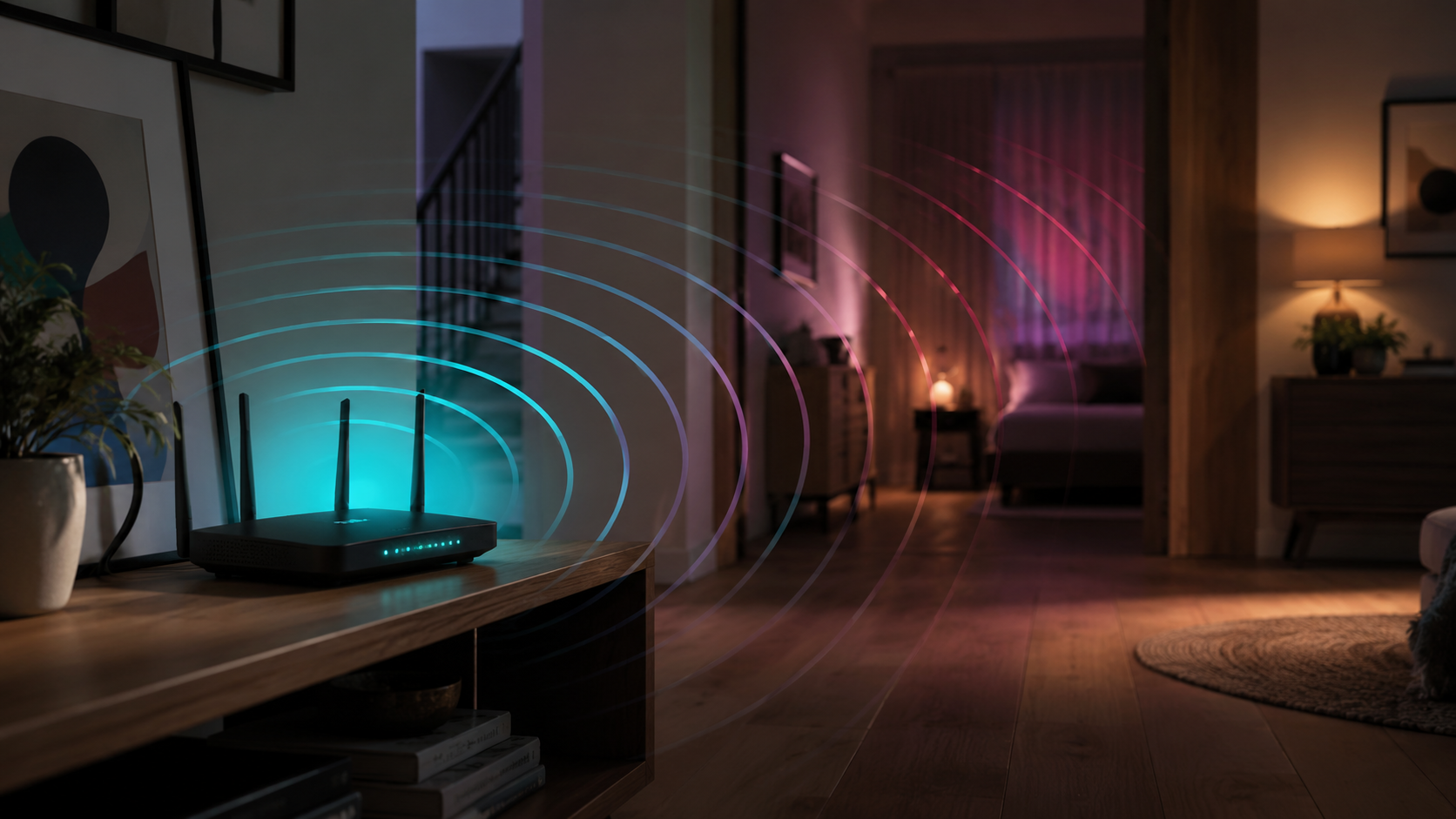
The average home now runs dozens of connected devices at once: video calls, 4K streams, cloud backups, game downloads, smart doorbells. Fiber gives every one of them full-speed headroom, in both directions, at the same time.
Count yours some evening and the number is usually higher than people guess, because half of it is invisible. A thermostat checks in. A doorbell uploads ten seconds of the mail carrier. A phone on the charger quietly backs up the photos from the afternoon. Each one is small. Together they are a constant background load, and on a connection with no room to spare, everything else has to take turns around it. Taking turns is what buffering is.
On fiber the background stays in the background. The heavy jobs, the 90 GB game patch, the video export, four people on four different calls, get real capacity instead of a queue. If you want the same story told against the alternatives, compare fiber vs. cable.
What it feels like once it is in
The honest description of living on fiber is that things stop being events. A video call does not need an announcement that everyone else should get off the internet. The game arrives while you make dinner instead of overnight. Photos finish uploading before you have set the phone down. Nobody wanders into the kitchen to report that the internet is being weird, because it is not being anything.
That is the whole pitch. Fiber is not a faster version of the connection you already have. It is a different wire with different physics, and the difference shows up in the ordinary parts of the day. It ZOOMS at 2 pm, and it still ZOOMS at 8.