
Speed gets the headlines, but latency decides gunfights. You can win a fight on a modest connection with a stable ping and lose one on a gigabit plan that spikes at the wrong instant. Here is what actually matters, roughly in the order it matters.
It is the ping, not the gig
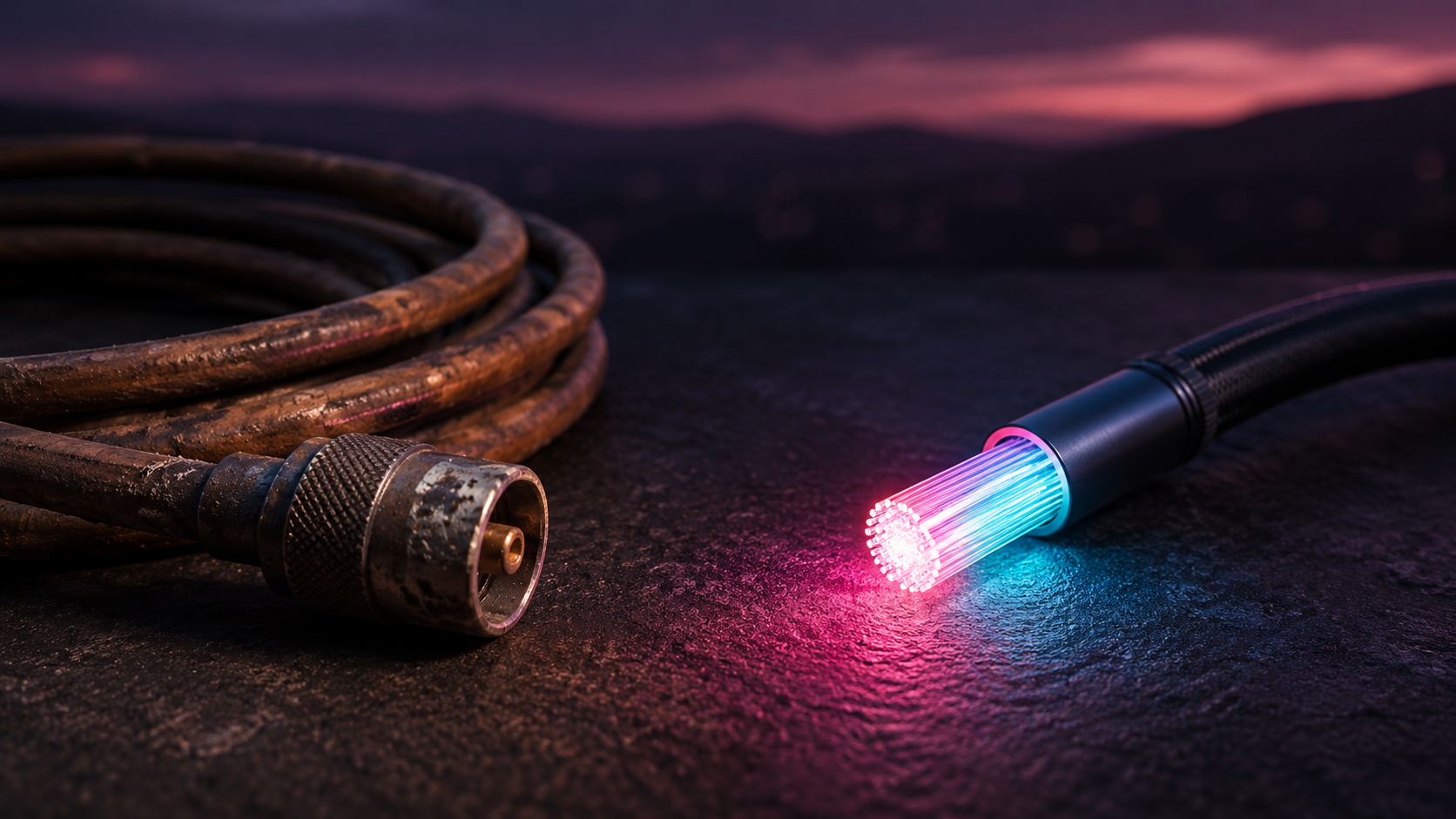
A 300 Mbps fiber line will out-feel a gig of cable in a firefight, because light through glass reaches the server sooner and more consistently than electricity through shared copper. Lower jitter means your shots land where you aimed.
Latency is the round trip: you press a key, the server hears about it, the world updates, your screen catches up. Games hide a lot of that with prediction, drawing what they think is about to happen rather than waiting to be told. When the real answer arrives late, the prediction has to be corrected, and correction is what you experience as a player teleporting across a doorway or a shot that clearly connected registering as a miss.
Ping is made of several things stacked together: the trip across the network, the queue inside your own house, and the distance to the server you were matched with. The first is the wire, the second is your setup, and the third is whatever the matchmaker decides. Fiber fixes the first one permanently and makes the second one easier to keep clean.
Jitter is the part you actually feel
Consistency beats a good average. A connection that runs at 18 ms and occasionally leaps to 90 feels worse than one that sits at 30 forever, because your timing adapts to a steady delay and cannot adapt to a random one. What fiber gives you:
- Low, stable ping under load
- Minimal jitter, fewer rubber-band moments
- No neighborhood congestion spikes at prime time
That last item is why prime-time gaming on a shared line has its own particular flavor of frustration. Your aim did not get worse at 8 pm. Your neighbors got home.
If you want to see it rather than feel it, most competitive games will draw a network graph on screen, and every operating system can run a continuous ping in a terminal window. Leave one running through an evening session. A flat line with a couple of small bumps is a healthy connection. A sawtooth that spikes whenever somebody else in the house does something is a diagnosis.
Stream it while you play it
Streaming to Twitch or YouTube while gaming is an upload-heavy job that cable chokes on. Symmetrical fiber uploads carry your 1080p60 stream without touching your gameplay.
- Symmetrical uploads for broadcasting
- Patch-day downloads in minutes
- Headroom for the Discord call, the stream, and the squad
The failure mode on a thin upload is not that the broadcast stops. It is that your game gets worse, because the stream is competing with your own inputs for the same narrow lane out of the house. Dropping the bitrate hides it for a while. Actual upstream capacity is the only thing that fixes it.
Broadcasting is only the loudest example. Clips uploading to a capture service, saves syncing to the cloud between sessions, a voice channel with six people in it, a second machine streaming to a handheld in another room: modern gaming pushes a surprising amount of data out of the house. On a symmetrical line none of that competes with anything, so it stops being something you think about.
Patch day stops being a day
Big releases and their updates arrive as enormous downloads, and the patch always seems to land on the evening you have twenty minutes free. When it lands in minutes rather than hours, that evening keeps its shape: you start the game, and then you play the game.
It matters more in a full house than it first looks. On a thin connection, one console updating in the background is enough for everyone else to notice, so the download turns into a negotiation with your own family. With real headroom it is just a progress bar that nobody has to schedule around.
It changes what you are willing to try, too. When a download is an overnight commitment, you stop installing things on a recommendation. When it is the length of a shower, you play the thing your friends are playing tonight, and that is most of the point of playing online at all.
The other four people in the house
The most common cause of a bad night is not the provider at all. It is everything else sharing the connection: a 4K stream in the living room, a phone backing itself up, a laptop pulling an update at the worst time. On a connection sized for the whole household rather than for one activity, none of that reaches your session.
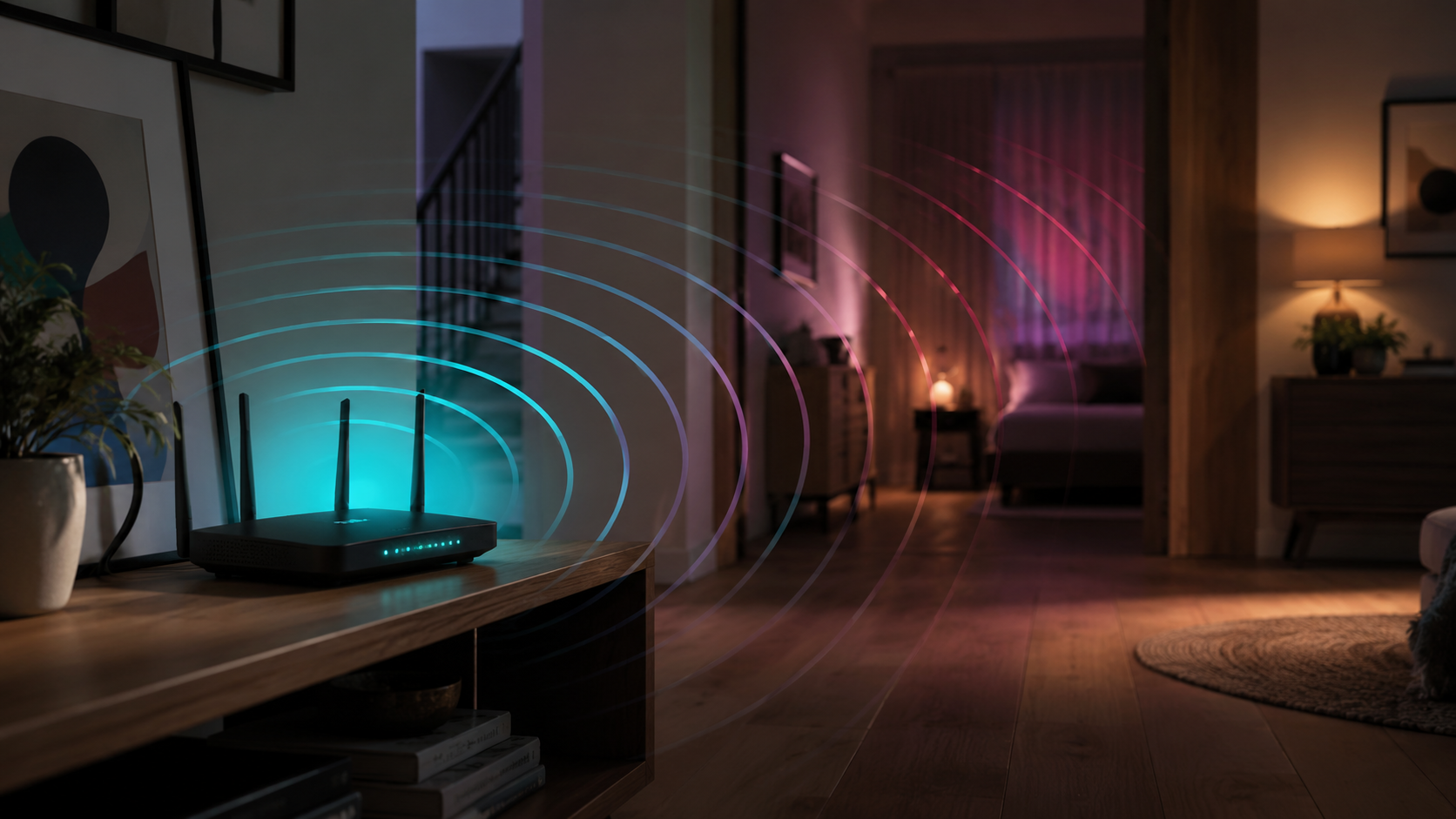
Know your own network too. A router in a basement corner or a battlestation three walls away can undo a genuinely good line, and fixing that usually costs nothing. If one corner of the house falls apart under load, the problem is coverage rather than speed, and coverage is the easier of the two to fix.
None of this makes anybody better at the game, and no provider should tell you otherwise. What it does is remove the excuse. Get the wire right and get the room right, and every round is decided by the thing that should decide it.