
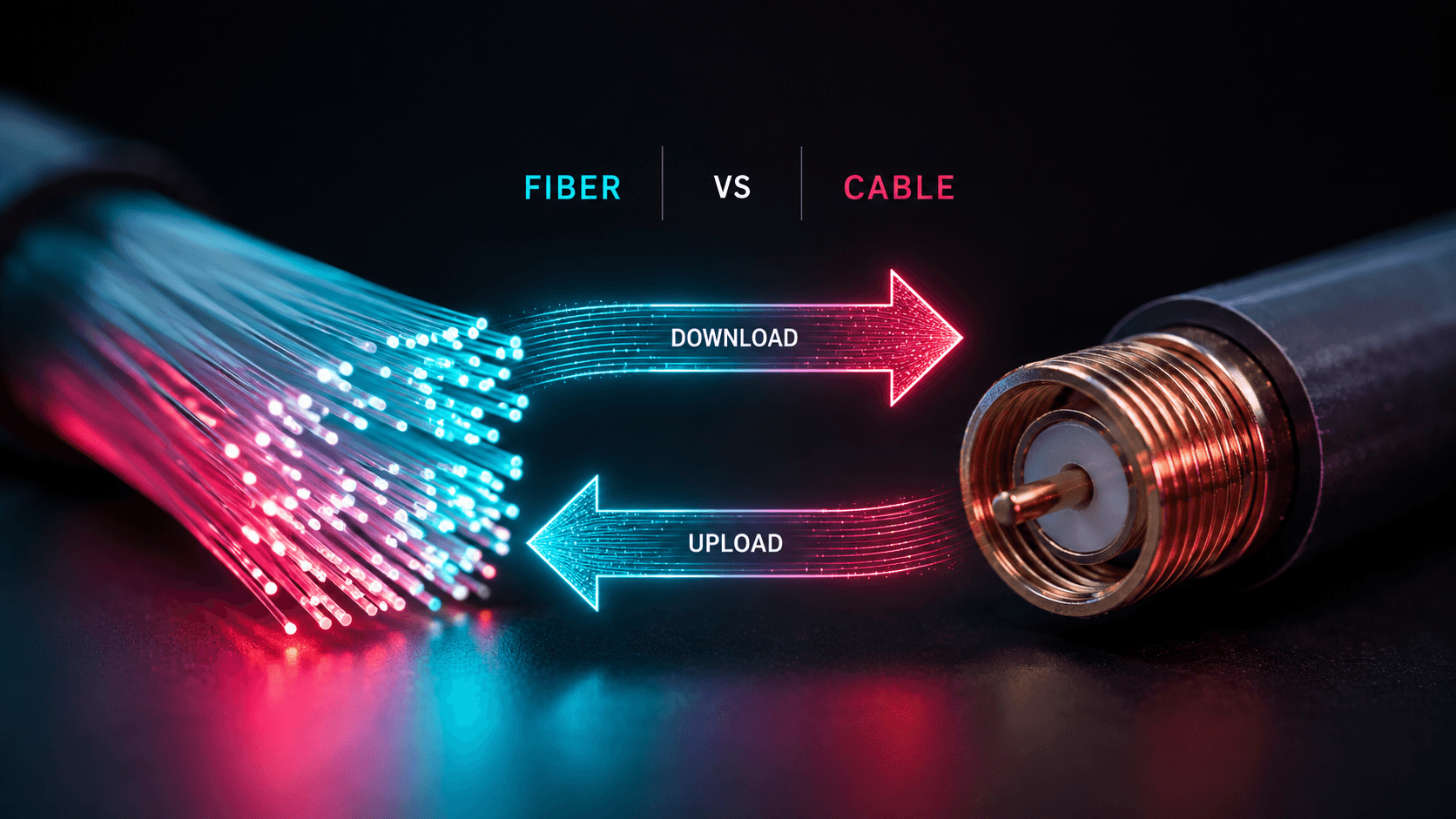
Cable companies advertise one number: the download speed. And to be fair, modern cable download speeds are respectable. But internet connections have two directions, and the second one, upload, is where cable quietly falls apart. A typical cable plan that ZOOMS downstream at 500 Mbps often crawls upstream at 20 or 30 Mbps. Fiber is different by design: the same speed in both directions.
Why cable is lopsided in the first place
Coaxial cable was built to deliver television, a one-way broadcast medium. When the industry retrofitted it for internet service, it inherited that one-way DNA: most of the channel capacity is reserved for downstream traffic because that is what the wire was always for. Upload is squeezed into the leftovers. No firmware update fixes that; it is physics plus legacy allocation.
Fiber-optic lines carry light, not electrical signals over shared copper. Each direction gets its own dedicated capacity, which is why fiber providers can offer 500 Mbps up when the plan says 500 Mbps down. The wire simply does not care which way the data flows.
Where you actually feel the difference
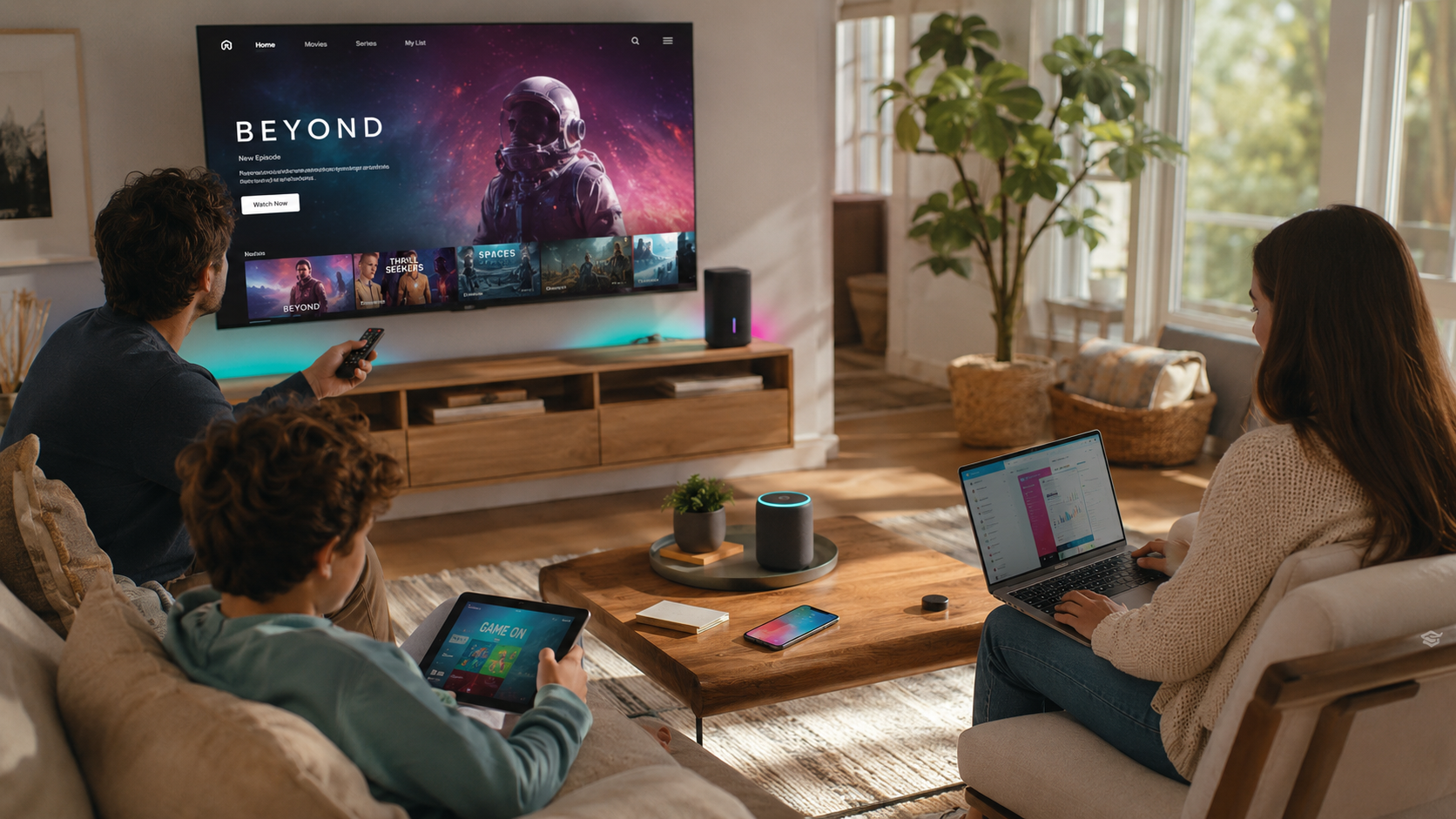
- Video calls: your camera feed is upload. A choppy, frozen call on fast cable is almost always the upstream choking.
- Cloud backup and photo libraries: uploading years of photos at 20 Mbps takes days; at 500 Mbps it takes an evening.
- Working from home: pushing large files, screen sharing, and remote desktops are all upload-heavy.
- Gaming and streaming yourself: broadcasting to Twitch or YouTube needs steady upstream headroom.
- Smart homes and cameras: every security camera is a small, constant uploader.
Latency and reliability, the quiet wins
Symmetry gets the headlines, but fiber also wins on latency, the delay before data starts moving. Light in glass makes the trip with fewer conversions and less neighborhood congestion, so pings stay low and stable even at peak hours. Cable nodes are shared among neighborhoods; when everyone streams at 8 pm, you can feel it. Fiber holds steady.
Reliability follows the same pattern. Fiber does not corrode the way copper does, is immune to electrical interference, and is unaffected by an amplifier failing three streets over. Fewer moving parts between you and the internet means fewer mystery slowdowns.
The bottom line
If all you ever did was watch shows, cable would mostly be fine. But modern internet life is two-way: you create, upload, call, back up, and host as much as you consume. Symmetrical fiber means never thinking about which direction your connection is good at. It ZOOMS both ways.